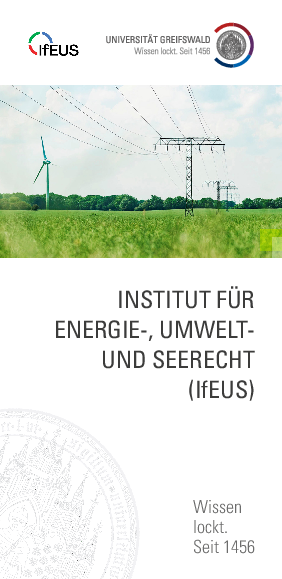
Institute for Energy, Environmental and Maritime Law (IfEUS)
The transformation of the energy, economic, health and social system towards a climate-neutral and sustainable system is a current challenge for politics. In addition, the Covid-19 pandemic has revealed that health protection is a global challenge and requires planetary health in the long term. This means that health and environmental protection must be considered together.
Moreover, addressing both challenges can hardly succeed without digitalization and the use of artificial intelligence. In order to avoid burdening future generations exclusively with overcoming them, while also avoiding to merely shift them to other areas, the development of overarching guiding principles, concepts and instruments is essential for the further development of health and environmental systems in a holistic and sustainable manner.
MANAGEMENT OF THE INSTITUTE
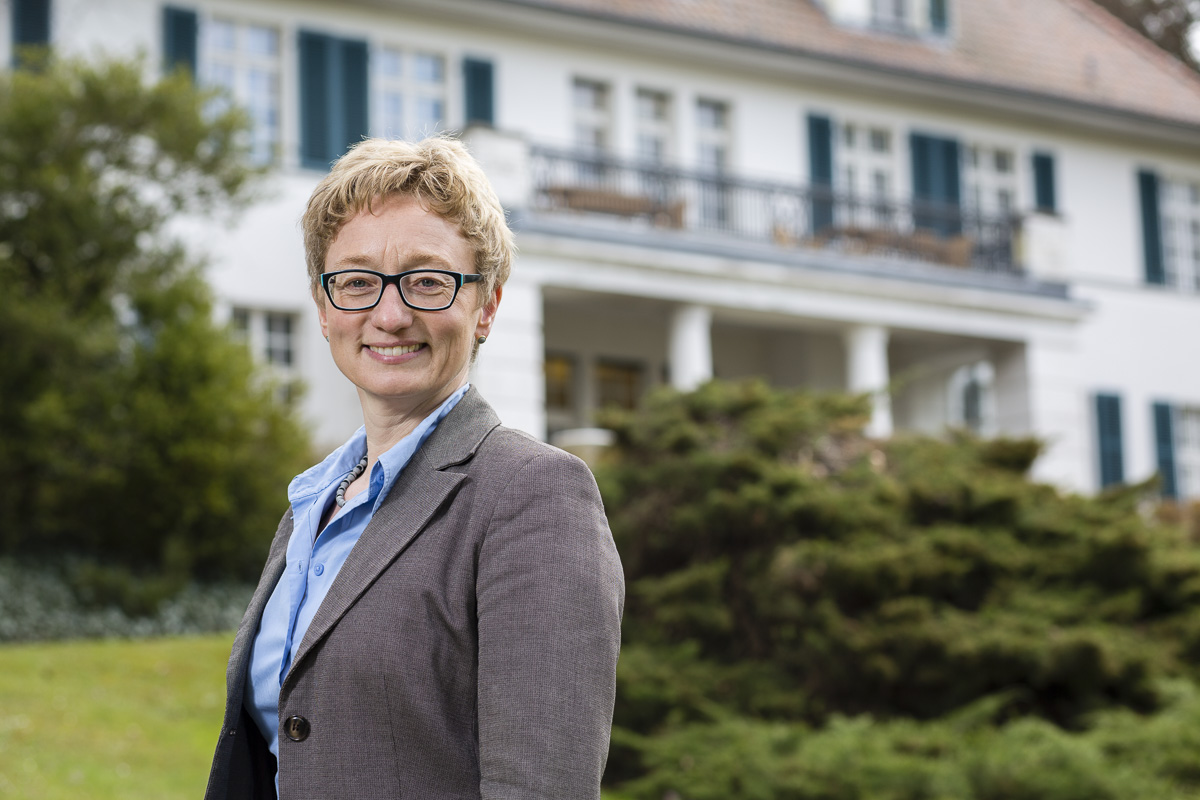
The Institute for Energy, Environmental and Maritime Law (IfEUS) pursues a holistic approach to interdisciplinary and transdisciplinary legal issues in its project and research work. The Institute is headed by the Managing Director Professor Dr. Sabine Schlacke.
Sabine Schlacke
Public Law, in particular Administrative and Environmental Law
Univ.-Prof., Dr. jur.habil.
Ernst-Lohmeyer-Platz 1, 17489 Greifswald
Phone +49 3834 420 2100
sabine.schlackeuni-greifswaldde
Further information:
Prof. Dr. Sabine Schlacke
TASKS AND FOCUS OF THE IfEUS
The epochal task of shaping the transformation of the energy, economic, health and social system into a climate-neutral and sustainable system, in which the findings of the most diverse disciplines must be integrated, requires legal support.
EVENTS
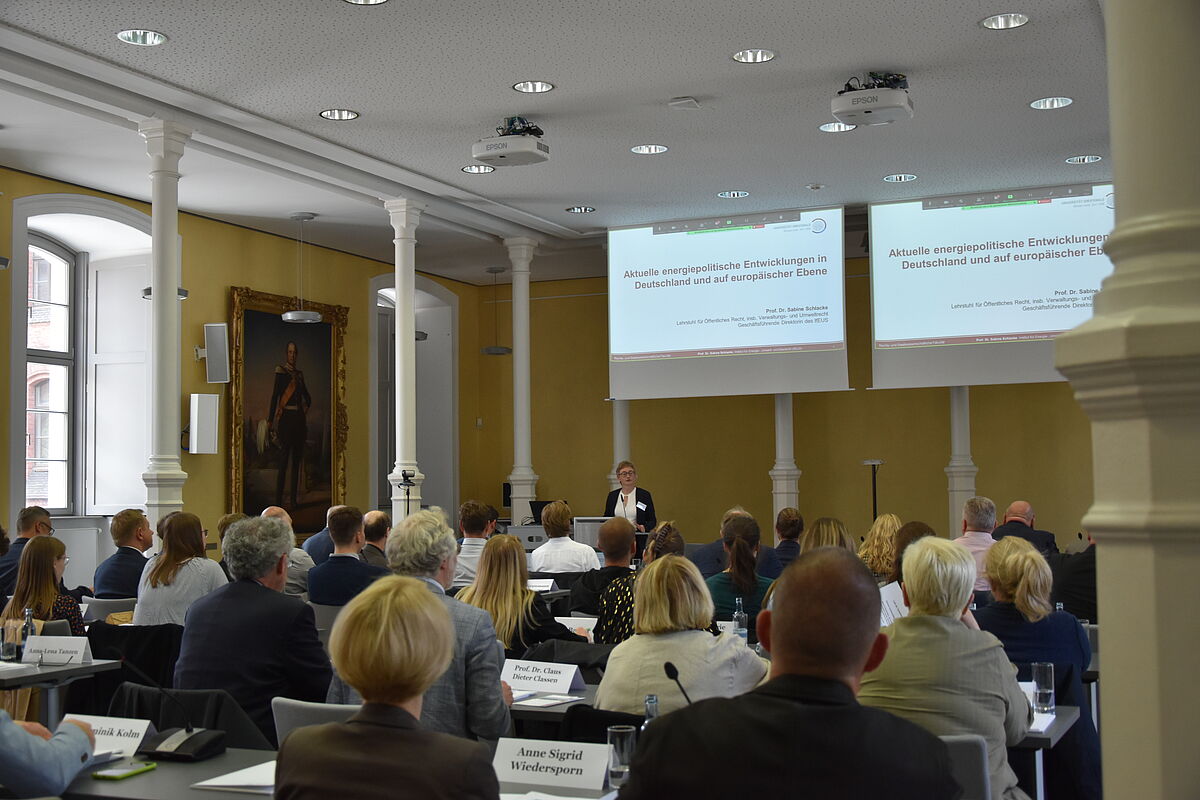
The Institute is actively involved in the transfer of knowledge between legal scholarship and legal practice through various event formats. You can access the IfEUS events here.
10th Greifswald Dialogue on "Legal Pathways to Nature Restoration"
Hybrid Event 29 April 2026 | 6:15–7:45 p.m. (CEST) Lecture Hall 1.22, Ernst-Lohmeyer-Platz 1, Greifswald, Germany
With the adoption of the EU Nature Restoration Regulation (Regulation (EU) 2024/1991) in 2024, the European legislator established a binding legal framework aimed at restoring biodiversity and strengthening the resilience of nature. The 10th Greifswald Dialogue is dedicated to examining the Regulation's objectives and instruments and placing them in a comparative legal context with Japanese law on nature restoration. The event focuses on analyzing different regulatory approaches and assessing their effectiveness in promoting ecological restoration and resilience.
Hybrid Event – Register Now for Online Participation
The event is open to the public and will take place in person, with the option to participate online.
To attend online, please use the registration form or send an email with the subject line "Online Registration" to ifeusuni-greifswaldde. Upon successful registration, you will receive the access details.
No registration is required for in-person participation.
Programme
Welcome Address
Prof. Dr. Sabine Schlacke
Director of the Institute for Energy, Environmental and Maritime Law (IfEUS), University of Greifswald
Presentations
The EU Nature Restoration Regulation – An Introduction to Its Objectives and Instruments
Frederick Qasem
Research Associate, Institute for Energy, Environmental and Maritime Law (IfEUS), University of Greifswald
Japanese Law on the Restoration of Nature – In Comparison with EU Nature Restoration Law
Prof. Dr. Yumiko Nakanishi (EU Law)
Hitotsubashi University, Tokyo, Japan
Discussion
The presentations will be followed by a 30-minute panel discussion, moderated by Prof. Dr. Sabine Schlacke, providing an opportunity for exchange between representatives from academia, politics, the judiciary, public administration, and legal practice.
Contact
Institute for Energy, Environmental and Maritime Law (IfEUS)
Ernst-Lohmeyer-Platz 1
17489 Greifswald, Germany
Phone: +49 3834 420 2100
Email: ifeusuni-greifswaldde
Website: https://www.uni-greifswald.de/ifeus
Venue
Lecture Hall 1.22
Ernst-Lohmeyer-Platz 1
17489 Greifswald, Germany
Organizer
Prof. Dr. Sabine Schlacke
Director, Institute for Energy, Environmental and Maritime Law (IfEUS), University of Greifswald
Environmental Moot Court European Law (EMCEL) 2026
Dear Students,
This year, the Universities of Greifswald and Münster are once again planning to participate jointly in the
Environmental Moot Court European Law (EMCEL)
and we warmly invite you to become part of our team.
No prior experience or prerequisites are required to participate. Everyone is welcome. To register, simply send an informal email to ls-schlackeuni-greifswaldde or david.plattneruni-greifswaldde by 31 January 2026.
The Environmental Moot Court European Law (EMCEL) offers you the opportunity to step out of the traditional student role for several weeks and engage intensively with an environmental law case from the perspective of a legal practitioner. In doing so, you will gain valuable practical and theoretical experience.
The EMCEL focuses on issues of European environmental law. In cooperation with universities from France, Belgium, Ireland, the Netherlands, and other countries, participants work on a common case based on key European environmental law directives. Applying their respective national legal systems, each team prepares written submissions on behalf of one of the parties to the dispute.
The case is then argued in a simulated administrative court hearing before the Higher Administrative Court (OVG) Greifswald, held in a hybrid format (in person and online) before professors and legal practitioners. During the hearing, the legal issues raised by the case are discussed from the different parties' perspectives, and at the conclusion of the proceedings, the court delivers its judgment.
Following the national hearings, the decisions are compared with those of the teams from the other participating countries, and similarities and differences are discussed. In a third session, the findings are presented to representatives of the Directorate-General for Environment of the European Commission, which is responsible for monitoring the implementation of EU environmental legislation. This final event takes place either online or in person in Brussels.
One of the EMCEL's greatest strengths is its comparative and non-competitive approach, which emphasizes academic exchange and collaborative problem-solving rather than competition.
In addition to receiving a certificate of participation, students at the University of Greifswald will be awarded a certificate recognizing their successful completion of a course in interdisciplinary key qualifications pursuant to § 5(2) No. 3 JAPO-MV.
Schedule of the Environmental Moot Court European Law (EMCEL)
- 2 February 2026 (10:00 a.m.–12:00 p.m., online): Introductory meeting and distribution of the case.
- Until 31 March 2026: Preparation of the written submissions (statement of claim and statement of defence).
- 21 April 2026 (9:00 a.m.): Simulated court hearing (before professors and judges), including oral pleadings and judgment (online or, where possible, in person; conducted in German).
- From 28 April 2026: Comparative international session (online; conducted in English).
- May/June 2026: Presentation at the European Commission (online or in person).
If you have any questions regarding the case or its preparation, Mr. Kretschmer (f_kret02uni-muensterde) and Mr. Plattner (david.plattneruni-greifswaldde) will be happy to assist you. Please do not hesitate to ask questions or raise any concerns. As participation is entirely voluntary, we want the experience to be both educational and enjoyable—not frustrating.
We look forward to welcoming you to the team!
Kind regards,
Prof. Dr. Sabine Schlacke and Prof. Dr. Michael Sauthoff
University of Greifswald
Prof. Dr. Susan Grotefels
University of Münster